
TL;DR: You’ve been meaning to do this for years. Something always comes up. The kids, the job, the move, the divorce, the remarriage. And now here you are, still without a plan, still telling yourself there’s time. There isn’t. Every day you go without an estate plan is a day a judge, a hospital administrator, or a distant relative gets to make decisions about your life, your money, and your children. Brandon Legal Group helps you build the plan that protects all of it, before someone else takes that choice away from you.
You Already Know You Need This
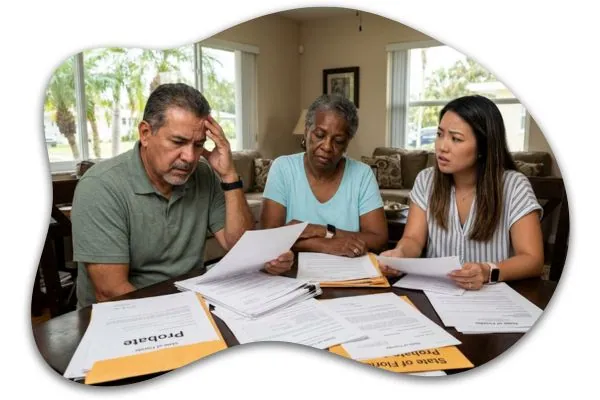 You’ve thought about it. Maybe after a health scare. Maybe after watching a family member die without a will and seeing the chaos that followed. Maybe after you got divorced, or remarried, or had kids, or bought a house. You know you need an estate plan. You just haven’t done it yet.
That’s the problem.
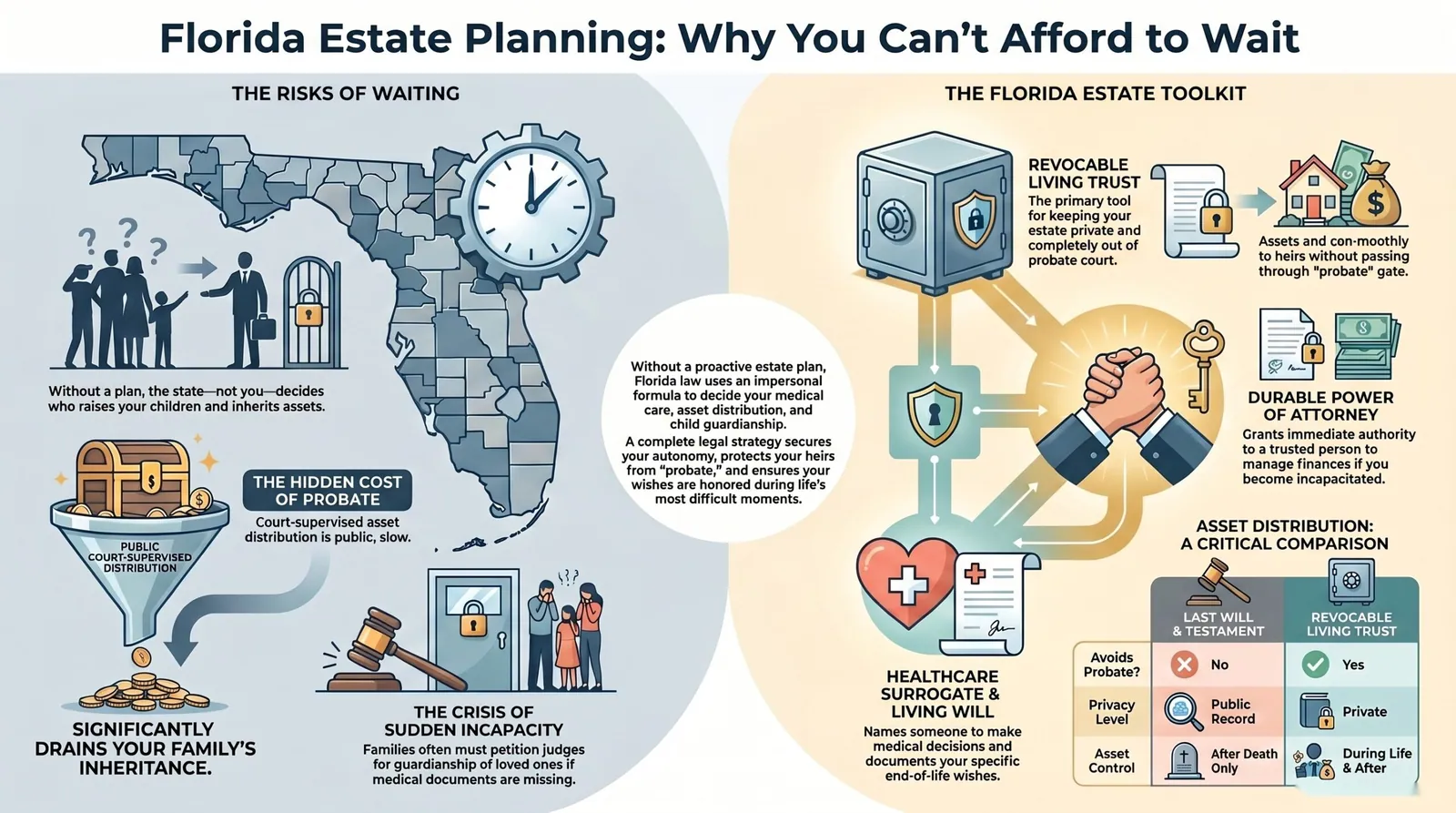
Because while you’re waiting for the right moment, Florida law has already written a plan for you. And it doesn’t care about your intentions, your relationships, your specific situation, or what you actually want. It follows a formula. A cold, impersonal formula that distributes your assets, assigns guardianship of your children, and decides who makes medical decisions for you, all without your input. ¶ ¶ That’s what no estate plan actually means. It doesn’t mean nothing happens. It means you handed the wheel to someone else.
What an Estate Plan Actually Is
An estate plan isn’t just a will. Most people think it is, and that misunderstanding costs families enormously. A complete estate plan is a set of legal documents that covers three distinct categories of your life:
- What happens to your assets after you die: who gets what, when, and under what conditions
- What happens if you become incapacitated: who manages your finances and makes your medical decisions if you can’t
- What happens to your children: who raises them if you’re gone, and how they receive any inheritance you leave behind
Each of these categories requires its own documents. A will handles some of it. A trust handles more. A durable power of attorney, a healthcare surrogate designation, and a living will handle the rest. You need all of them working together. A single document does not cut it.
The Documents You Actually Need
Let’s be direct about what belongs in a proper estate plan for most Florida residents.
A Last Will and Testament. This directs who receives your assets after death and names a personal representative, the person responsible for carrying out your wishes. If you have minor children, this is where you legally nominate their guardian. Without a will dictating your choice, a judge is left to decide on their own. That judge doesn’t know your family.
A Revocable Living Trust. This is the document that keeps your estate out of probate, the court-supervised process that delays asset distribution, drains money, and makes your personal affairs public record. A trust transfers assets to your beneficiaries directly, privately, and on your timeline. It also gives you far more control over how and when adult children or other beneficiaries actually receive their inheritance. Our estate planning attorneys build these trusts to work the way you actually need them to work.
A Durable Power of Attorney. This names someone to manage your financial affairs if you become incapacitated. Without it, your family may have to go to court to get that authority, a process that is slow, expensive, and public. With it, the right person steps in immediately.
A Healthcare Surrogate Designation. This names the person who makes medical decisions for you if you cannot make them yourself. This is not the same as a living will. This is a specific individual given legal authority to speak for you in a medical setting. Choose carefully. Choose someone who will fight for what you actually want, not what’s easiest for them. ¶ ¶ A Living Will. This documents your end-of-life wishes, whether you want life-sustaining treatment continued under specific circumstances. Without this document, the people you love are left guessing, grieving, and sometimes fighting each other over what to do. A living will removes that burden from them entirely.
Updated Beneficiary Designations. Your retirement accounts, life insurance policies, and certain bank accounts pass directly to named beneficiaries, completely outside your will and trust. If those designations are outdated, your ex-spouse, an estranged relative, or a deceased individual could legally receive those assets. Review them now.
When People Wait, This Is What Happens
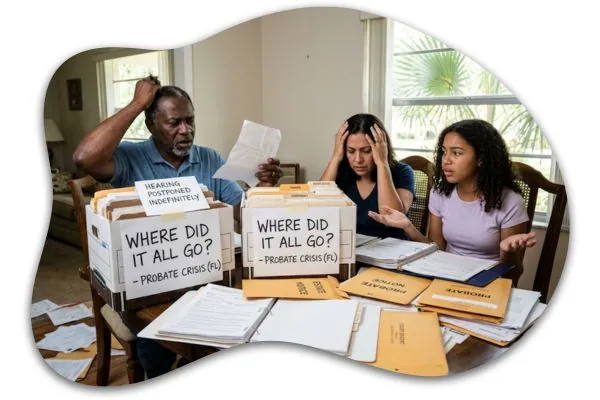 The estate planning conversations nobody wants to have? They happen eventually; just usually in a hospital hallway or a probate courtroom.
A spouse gets incapacitated suddenly. There’s no power of attorney. The family has to petition the court for guardianship of their own husband or wife. That process takes months, costs thousands, and requires ongoing court oversight for as long as the incapacity lasts.
A parent dies without a trust. The estate goes through probate. It takes the better part of a year. The court records are public. Attorney fees eat into the inheritance. Adult children who were supposed to share equally start fighting about the house.
A blended family. A second marriage. No updated documents. The law forces a rigid 50/50 split between your new spouse and your children from the first marriage, tying their finances together and often forcing the sale of assets just to divide the cash. Not because anyone wanted it that way, but because the paperwork said so. ¶ ¶ These are not edge cases. This is what happens when people wait.
Life Events That Mean You Need to Act Now
If any of these apply to you, your estate plan either doesn’t exist or needs immediate attention:
- You got married or remarried
- You had children or adopted
- You went through a divorce
- You bought a home or significant property in Florida
- You received an inheritance or significant assets
- A beneficiary on your documents died or the relationship ended
- Your children became adults
- You started or sold a business
- Your health changed significantly
Estate plans are not set-it-and-forget-it documents. They need to reflect your actual life, not the life you had five or ten years ago when you first signed something.
Frequently Asked Questions
Do I need a trust if I already have a will?
Probably. A will alone does not avoid probate in Florida. If keeping your estate out of court, maintaining privacy, and controlling exactly how your beneficiaries receive assets matters to you, and it should, then a revocable living trust is not optional. It is the smarter structure for most people with any meaningful assets.
What happens if I become incapacitated without a power of attorney?
Your family goes to court. A judge decides who has legal authority over your finances and medical decisions. The process is slow, expensive, and the outcome is not guaranteed. A durable power of attorney and healthcare surrogate designation are designed to keep your family out of court.
Can I just do this online?
You can. But Florida has specific legal requirements for wills, trusts, and powers of attorney that online templates frequently fail to meet. A document that isn’t executed properly isn’t worth the paper it’s printed on. More importantly, a generic template doesn’t account for your actual situation, your blended family, your business, your specific assets, your intentions. Get it done right the first time.
How often should I update my estate plan?
¶ Review it every three to five years at minimum, and immediately after any major life event. Marriage, divorce, a new child, a significant asset purchase, a death in the family, a change in your health. Any of these can make your existing documents inadequate or actively harmful to your intentions.
Is estate planning only for wealthy people?
No. If you own anything, have children, or care about who makes decisions for you when you can’t, you need an estate plan. The size of your estate determines the complexity of your plan, not whether you need one at all.
Stop Waiting for the Right Moment
The right moment was yesterday. The next best option is today.
You have worked too hard, built too much, and love the people in your life too deeply to leave any of this to chance. An estate plan is not a morbid exercise. It is the single most powerful thing you can do right now to protect your family, your assets, and your own autonomy when it matters most.
Brandon Legal Group builds legally sound estate plans designed to reflect what you actually want, and that don’t leave your family cleaning up a mess you could have prevented. Talk to our estate planning attorneys in Brandon, FL, and get it done.