
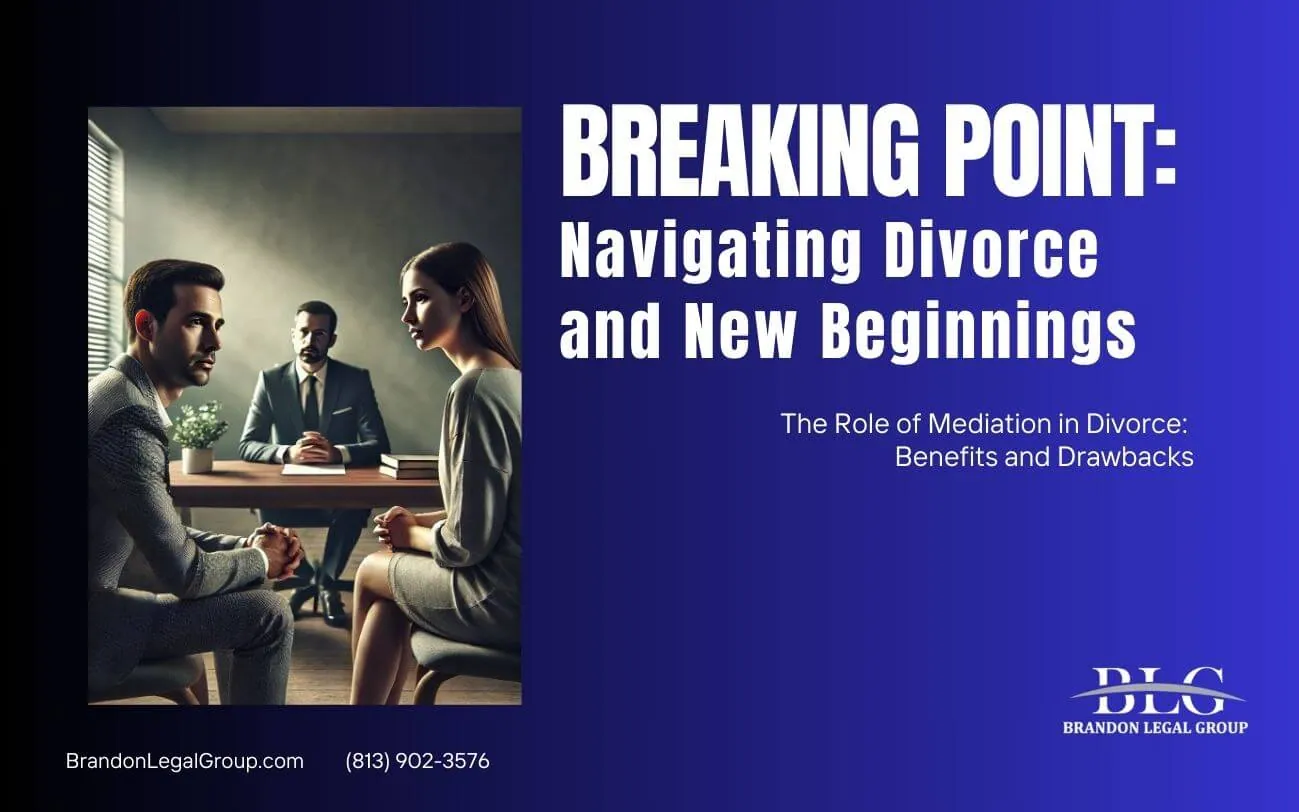
When considering divorce, many couples hear about “mediation” as an alternative to a contentious courtroom battle. While it can be a valuable tool, mediation is not a universal panacea, and understanding its true role, benefits, and potential drawbacks is crucial. At Brandon Legal Group, we provide strategic clarity and unapologetic advocacy. We don’t sugar-coat the realities; we arm you with the direct truths and the courage needed to make decisive choices for your future, whether through mediation or litigation. For dedicated support through your divorce, contact a divorce and family lawyer in Brandon.
 What is Divorce Mediation?
Divorce mediation is a form of alternative dispute resolution where divorcing couples meet with a neutral third-party, called a mediator, to discuss and negotiate the terms of their divorce settlement. The mediator’s role is to facilitate communication, identify issues, and help both parties explore potential solutions. They do not act as a judge, nor do they provide legal advice or advocate for either spouse.
In Florida, mediation is often a mandatory step in divorce proceedings. Even if parties are highly adversarial, a court will typically require them to attempt mediation before proceeding to a final trial. This can be a significant part of the divorce mediation process itself.
Benefits of Divorce Mediation
When appropriate and approached strategically, mediation can offer several advantages:
- 1. Cost-Effective: Mediation can be less expensive than traditional litigation, as it may reduce the amount of time attorneys spend on discovery, motions, and court appearances.
- 2. Time-Saving: Reaching an agreement through mediation can often be quicker than navigating the court system, which can be prone to delays and backlogs.
- 3. Confidentiality: Unlike court proceedings, which are public record, mediation discussions are confidential and private.
- 4. Greater Control and Flexibility: Couples retain more control over the outcome, allowing for creative, customized solutions that a judge might not be able to order.
- 5. Reduced Conflict and Improved Communication: A neutral mediator can help de-escalate tensions and facilitate more productive conversations, which can be especially beneficial for child custody and co-parenting relationships post-divorce.
- 6. Preservation of Relationships: A less adversarial process can help preserve a more civil relationship between former spouses, which is often crucial if children are involved.
 Drawbacks and When Mediation May NOT Be Suitable
Mediation is not a one-size-fits-all solution, and it carries significant drawbacks or may be entirely inappropriate in certain situations:
- 1. Power Imbalances: If there’s a history of domestic violence, emotional abuse, or a significant power imbalance, mediation can be detrimental. The weaker party may be coerced into an unfair agreement. In cases involving domestic violence, direct legal intervention is almost always necessary.
- 2. Lack of Full Disclosure: Mediators cannot compel disclosure of financial information. If one spouse is suspected of hiding assets or debt, mediation may not uncover the full picture, leading to an inequitable settlement. This impacts your ability to protect your nest egg or address marital debt effectively.
- 3. No Legal Authority or Enforcement: A mediator cannot make decisions for the parties, and any agreement reached is not legally binding until it is formalized into a legal document and approved by a judge.
- 4. Emotional Barriers: High levels of anger, distrust, or emotional distress can make productive negotiation impossible, leading to a breakdown in mediation.
- 5. Unequal Legal Knowledge: While attorneys can attend mediation with their clients, some couples attempt mediation without legal counsel. This puts the less informed party at a significant disadvantage, potentially leading them to agree to unfavorable terms regarding alimony or property division without understanding their full divorce legal rights.
- 6. Non-Cooperation: If one or both parties are unwilling to compromise or negotiate in good faith, mediation becomes a waste of time and resources.
The Brandon Legal Group Approach: Strategic Advocacy in Any Arena
At Brandon Legal Group, we view mediation as one tool in a comprehensive legal strategy, not a default solution. We excel at providing the unwavering strength and direct counsel necessary to assess whether mediation is truly beneficial for your unique situation, or if a more direct, aggressive approach is required. Our commitment is to a decisive outcome that unequivocally serves your best interests.
When mediation is the right path, we don’t just send you in alone. We:
- Prepare You Strategically: We ensure you understand your legal rights, your financial position, and what constitutes a fair outcome *before* you enter mediation.
- Advise and Protect: We attend mediation sessions with you, providing real-time legal advice, ensuring full disclosure from the opposing party, and safeguarding your interests against undue pressure or unfair terms.
- Review and Finalize Agreements: Any agreement reached in mediation is rigorously reviewed by our team to ensure it is legally sound, enforceable, and comprehensively protects your future.
Whether in a negotiation room or a courtroom, our goal remains the same: to provide the uncompromising advocacy and strategic clarity that empowers you to achieve a decisive resolution and move forward with confidence. We handle all aspects of family law services with this commitment.
Illustrative Scenario: Mark’s Mediated Clarity
Mark’s estranged wife insisted on mediation, portraying it as the “amicable” and “easy” path. Mark, fearing litigation, was initially open to it. However, he came to Brandon Legal Group for clarity, expressing concern that his wife had historically been manipulative and financially opaque.
Our team at Brandon Legal Group didn’t dismiss mediation outright. Instead, we provided Mark with a direct, strategic assessment. We explained the benefits but highlighted the significant drawbacks given his wife’s patterns. We advised him on crucial pre-mediation steps, including demanding full financial disclosure and outlining his non-negotiables regarding his retirement accounts and co-parenting schedule for their children.
When they entered mediation, Mark was no longer passive. Empowered by Brandon Legal Group’s unwavering legal counsel and strategic preparation, he presented his demands with a new spine. His attorney ensured all financial documents were reviewed and challenged where incomplete. While the mediation was intense, Mark, through the strategic guidance of his attorney, was able to push for a comprehensive agreement that protected his long-term financial security and secured a fair parenting plan, achieving a decisive outcome that was truly amicable because it was equitable.
Disclaimer: This scenario is illustrative and does not represent any specific client or outcome. Every legal situation is unique and requires personalized advice.
Frequently Asked Questions About Mediation in Divorce
1. Is mediation mandatory in Florida divorce cases?
Yes, in most Florida divorce cases, divorce courts require parties to attend mediation before a final hearing. The goal is to encourage settlement and reduce the burden on the court system.
2. Do I need an attorney for divorce mediation?
While you can technically attend mediation without an attorney, it is highly advisable to have legal representation. Your attorney can advise you on your rights, help you prepare, attend the session with you, and review any proposed agreements to ensure they protect your best interests.
3. What happens if we can’t agree during mediation?
If an agreement cannot be reached in mediation, the case proceeds through the court system. The mediator will report to the court that an impasse was reached, and the parties will then move towards trial to resolve the outstanding issues.
4. Are agreements reached in mediation legally binding?
A mediation agreement is not legally binding until it is put into a formal written document (often called a Marital Settlement Agreement), signed by both parties, and approved by a judge as part of the final divorce decree.
Conclusion: Mediation as a Strategic Tool, Not a Default Answer
Divorce mediation offers a path to resolution that can be more efficient, private, and less adversarial than traditional litigation. However, its effectiveness depends heavily on the specific circumstances of your case, the willingness of both parties to cooperate, and the quality of legal advice you receive.
At Brandon Legal Group, we provide the strategic clarity and uncompromising advocacy needed to determine if mediation is truly in your best interest. Whether negotiating across a table or arguing in a courtroom, we empower you with the strength and direct truths to achieve a decisive, protected outcome, securing your future with unwavering confidence.