

Self-Employment and Child Support: Understanding How Florida Courts Calculate Income
As a self-employed parent, you have unique financial circumstances that require special consideration in child support calculations. Florida courts use different methods to determine income for business owners than they do for traditional wage earners. Understanding how courts analyze self-employment income can help you prepare for child support proceedings and ensure accurate calculations that reflect your true financial situation while meeting your child’s needs.
How Florida Courts Calculate Child Support Income for Self-Employed Parents
 When determining child support for self-employed parents, Florida courts look beyond the net income shown on your tax returns. The court conducts a thorough analysis of your actual gross income and carefully reviews business deductions to determine which expenses genuinely reduce your ability to pay child support versus which expenses provide personal benefits or are discretionary.
The court starts with your gross business receipts and allows deductions only for expenses that are both ordinary and necessary to produce business income. Expenses that benefit you personally or that are discretionary may be scrutinized and potentially disallowed for child support calculation purposes, even if they are legitimate tax deductions. This process helps courts determine your actual available income, the funds you have to support your child. This is an important component of how Florida calculates child support.
Understanding “Add-Backs” in Child Support Calculations
A critical concept in business owner child support obligations is the “add-back.” Certain deductions that legitimately reduce your taxable income for IRS purposes may be added back to your income for child support calculation purposes because they don’t actually reduce your cash flow or ability to support your child.
Common add-backs may include:
- Depreciation: While this is a legitimate tax deduction, it’s a non-cash expense that doesn’t affect your actual available funds.
- Personal use of business assets: If you use a company car, phone, or other assets for personal purposes, the value of that personal use may be counted as income.
- Discretionary expenses: Business meals, travel, or entertainment that exceeds normal business necessity may be added back.
- Excessive retirement contributions: Contributions beyond reasonable amounts may be considered discretionary income reduction.
- Home office deductions: These may be scrutinized if they exceed reasonable business use.
The purpose of add-backs is to accurately reflect your true financial capacity to support your child, not to penalize legitimate business operations. Courts distinguish between necessary business expenses and discretionary spending that reduces reported income without reducing actual available funds.
 Income Imputation: When Courts Assign Income Based on Earning Capacity
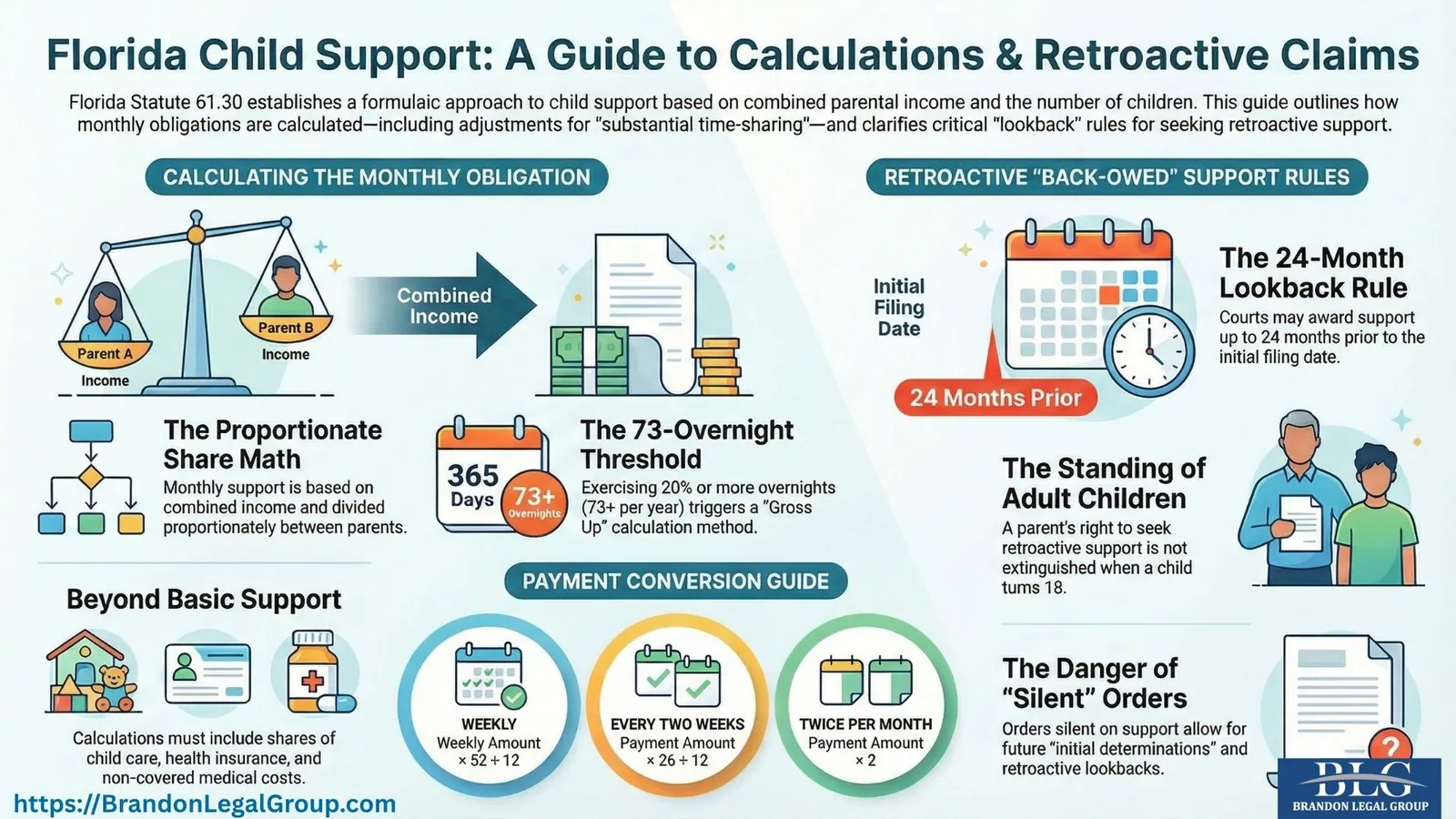
Under Florida Statute 61.30, if your reported income appears inconsistent with your lifestyle, work history, or qualifications, a court may impute income to you. This means the judge can assign you an income figure based on:
- Your recent earnings history
- Your education and professional qualifications
- Your demonstrated job skills and experience
- Prevailing earnings in your industry or occupation
- Your available job opportunities
Income imputation is designed to prevent parents from voluntarily reducing their income to avoid child support obligations. However, courts also consider whether income reduction was voluntary or involuntary, and whether it was made in good faith. For example, starting a new business venture in good faith that temporarily reduces income is treated differently than deliberately reducing work hours to avoid obligations.
Documentation Requirements for Self-Employed Parents
Self-employed parents typically bear a heavier burden of documentation in child support cases. You should be prepared to provide:
- 2-3 years of personal and business tax returns (including all schedules)
- Profit and loss statements
- Business and personal bank statements
- Business ledgers and accounting records
- Invoices, receipts, and documentation of expenses
- Evidence of business revenue from all sources
Clear, well-organized financial records help establish credibility with the court and support accurate income determination. Incomplete or disorganized records may lead courts to draw negative inferences or rely more heavily on income imputation.
Child Support Enforcement in Florida
 Florida has a comprehensive child support enforcement system designed to ensure children receive the financial support to which they are entitled. Understanding enforcement mechanisms can help you avoid serious consequences.
Enforcement remedies available to courts include:
- Income withholding orders
- Liens on real and personal property, including business property
- Seizure of bank accounts or business assets
- Suspension of driver’s licenses
- Suspension of professional or occupational licenses
- Contempt of court proceedings, which can result in fines or incarceration for willful non-payment
- Credit bureau reporting
- Interception of tax refunds
It’s important to note that contempt sanctions are reserved for willful violations; inability to pay due to genuine financial hardship is treated differently than deliberate refusal to meet obligations. If your financial circumstances change significantly, you should seek a modification of your child support order rather than simply stopping or reducing payments. For more information, see our guide on Florida child support enforcement.
Working Toward Accurate and Fair Child Support Orders
The goal of Florida’s child support system is to ensure children receive appropriate financial support based on both parents’ actual ability to pay. For self-employed parents, this requires transparent financial disclosure and careful documentation.
By understanding how courts analyze self-employment income, you can:
- Prepare comprehensive financial documentation
- Distinguish between legitimate business expenses and personal benefits
- Present an accurate picture of your financial circumstances
- Work toward a fair child support order that reflects reality
- Avoid enforcement actions by meeting your obligations
Whether you’re seeking to establish child support, modify an existing order, or respond to enforcement actions, understanding these principles can help you navigate the process more effectively.
Legal Guidance for Self-Employed Parents
Navigating self-employment and child support often involves complex financial analysis and legal procedures. Working with an attorney who understands both family law and business finances can help ensure your income is calculated accurately and that your child support obligation reflects your true financial circumstances.
At Brandon Legal Group, we work with self-employed clients to prepare comprehensive financial presentations, distinguish between legitimate business expenses and add-backs, and advocate for fair child support determinations. We can help you understand your obligations and rights under Florida law.
Self-Employment and Child Support FAQs
The following information is general in nature. For advice specific to your situation, consult with a qualified Florida family law attorney.
How is child support calculated for self-employed parents?
Florida courts calculate child support for self-employed parents by determining your actual gross income, which may differ from your taxable income. Courts often add back certain business deductions you take on your tax returns, such as depreciation, business entertainment expenses that exceed normal business needs, and personal use of business assets. The goal is to determine your true available income to support your child. Courts may also impute income based on your earning capacity if there’s evidence of voluntary underemployment, though this determination requires specific findings.
What income counts for child support if you are self-employed?
Courts examine your gross business receipts minus legitimate business expenses that are ordinary and necessary to produce income. This includes reviewing your Schedule C (or other business tax forms), bank statements, and actual cash flow. Income sources can include client payments, cash receipts, reimbursements that exceed actual expenses, personal use of business assets, and retained business earnings. Courts distinguish between necessary business expenses (which are allowed) and discretionary expenses or personal benefits (which may be added back). Accurate reporting is essential, as misrepresenting income can lead to serious child support enforcement consequences.
How do courts verify income for self-employed parents?
Courts conduct thorough reviews of self-employment income, often requiring 2-3 years of tax returns, profit and loss statements, bank statements (business and personal), invoices, receipts, and business ledgers. Courts pay particular attention to unexplained income fluctuations, especially decreases that coincide with child support proceedings. If documentation is incomplete or if reported income seems inconsistent with a parent’s lifestyle or work history, courts may impute income based on past earnings, industry standards, education, or demonstrated work capacity. Providing clear, comprehensive documentation helps establish accurate income determinations.
What should I do if my self-employment income changes significantly?
¶ If your business income changes substantially, whether it increases or decreases, you should consider seeking a modification of your child support order through the court. Do not simply stop making payments or unilaterally change payment amounts, as this can result in arrears and enforcement actions. Florida law requires a substantial, material, and unanticipated change in circumstances to modify child support. Document the change in your income with financial records and consult with an attorney about whether your situation warrants filing for modification.
Can I deduct all my business expenses from income for child support purposes?
Not necessarily. While legitimate, ordinary, and necessary business expenses that are required to generate income are generally deductible for child support calculation purposes, courts scrutinize expenses that provide personal benefits or that are discretionary. The standard for child support income calculation may differ from IRS tax deduction rules. Courts focus on your actual available income and cash flow, not just your taxable income. Working with an attorney and potentially a forensic accountant can help properly classify expenses and present an accurate financial picture.
Disclaimer: This information is provided for educational purposes only and does not constitute legal advice. Every child support case involving self-employment is unique, and income calculations depend on specific financial circumstances, business structures, and individual facts. The distinction between legitimate business expenses and add-backs requires careful analysis of your particular situation. Florida child support law is complex, and proper calculation often requires both legal and financial expertise. Consult with a qualified Florida family law attorney to discuss your specific situation and ensure your child support obligation is calculated accurately and fairly.