

Why Your Custody Schedule is Your Child’s Anchor in the Storm
You know divorce is destabilizing for your children. The question isn’t if you need a physical custody schedule, but what kind of schedule will act as an anchor instead of adding to the turbulence. A well-structured plan eliminates the constant question of “Where will I be tonight?”, a primary source of anxiety for kids. It replaces chaos with predictability, giving your child the consistency they desperately need to feel secure.
How to Structure a Custody Schedule That Puts Your Child First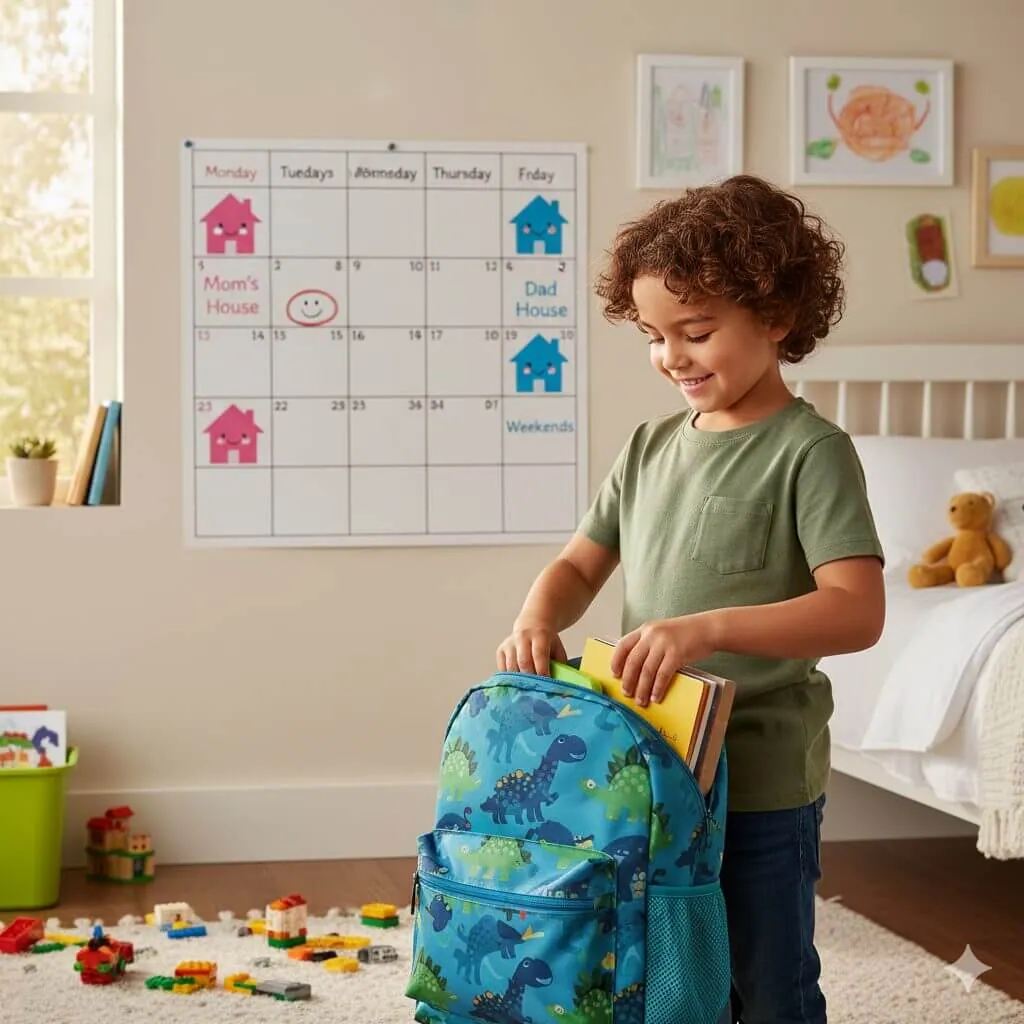
The “best” schedule isn’t a one-size-fits-all solution; it’s the one that aligns with your child’s age, your family’s logistics, and, most importantly, your child’s emotional needs. The goal is seamless transitions, not rigid fairness.
The 2-2-3 Schedule: Consistency for Younger Children
This schedule is ideal for toddlers and young children who need frequent contact with both parents. One parent has custody for two days, the other for two days, and then they alternate a three-day weekend. It provides frequent contact but requires strong co-parenting agreements and communication to manage the frequent hand-offs effectively.
The 50/50 Week-On, Week-Off Schedule: Stability for Older Kids and Teens
For school-aged children and teenagers, a week-on/week-off rotation can provide deeper immersion in each household. It minimizes mid-week transitions, allowing kids to settle into homework routines and extracurricular activities without packing up every few days. However, a full week apart can be challenging for some parent-child relationships and requires parents to be diligent about communication during the off-week. You can learn more about the factors judges consider in our guide on Florida child custody laws.
The Every-Other-Weekend Standard: When Distance or Schedules Dictate
This is a common standard when one parent is the primary residential parent. The non-residential parent has custody every other weekend from Friday to Sunday, and often one evening during the week. While not a 50/50 split, its predictability can still provide significant stability if the weekly visits are consistent and meaningful.
The Hidden Risk of a Poorly Planned Custody Schedule
Without a clear, court-ordered schedule, you invite conflict. Every holiday, school break, and unexpected event becomes a negotiation, or a battle. This constant uncertainty directly undermines your child’s sense of stability. A vague agreement is a recipe for chaos, misinterpretation, and a return to court for enforcement. For parents dealing with a difficult ex-partner, a detailed schedule is your first line of defense. Our article on co-parenting strategies for difficult ex-partners offers further guidance.
Picture This: Peaceful Sundays and Confident Kids
Imagine a Sunday evening where the hand-off is a simple, calm exchange instead of a tense negotiation. Picture your child confidently knowing what to expect each week, able to focus on being a kid instead of managing their parents’ logistics. This isn’t a distant dream; it’s the direct result of a thoughtfully crafted parenting time arrangement designed for stability, not just convenience.
Your Next Step: From Conflict to Clarity
Designing this schedule on your own, especially when emotions are high, is nearly impossible. You need an objective expert who can translate your family’s unique dynamics into a legally sound, practical plan.
Physical Custody Schedule FAQs
What is the most common child custody schedule in Florida?
While it varies, a common arrangement involves the child living primarily with one parent and the other parent having visitation every other weekend and one evening per week. However, 50/50 shared custody planning is becoming increasingly common when both parents live in close proximity and can effectively co-parent.
Can a custody schedule be modified?
Yes. Florida courts allow for the modification of a custody schedule if there has been a substantial, material, and unanticipated change in circumstances and the modification is in the child’s best interest. This could be a parent’s relocation, a change in the child’s needs, or repeated violations of the existing order.
How do judges decide what custody schedule is best?
Florida judges base their decision entirely on the best interest of the child. Factors include the child’s age and developmental needs, each parent’s ability to provide a stable home, the geographic proximity of the parents’ homes, the child’s school and community ties, and the parents’ demonstrated capacity to support the child’s relationship with the other parent.