
Strategic Moves and Legal Thresholds When Relocating
You just found out your child’s other parent is talking about a “fresh start” in another city, or you woke up to discover they’ve already moved more than an hour away without your consent. Your first reaction is fear and anger. Your second reaction should be strategy.
Under Florida law, a parent cannot simply pack up a child and move far away from the other parent without following very specific rules. When a parent tries to relocate improperly, you have tools to fight back and protect your relationship with your child, but timing and evidence matter.
¶
At Brandon Legal Group, our job is to take the fear and guesswork out of that moment so you can make calm, child-focused decisions instead of emotional ones.
What Counts as “Improper Relocation” Under Florida Law?
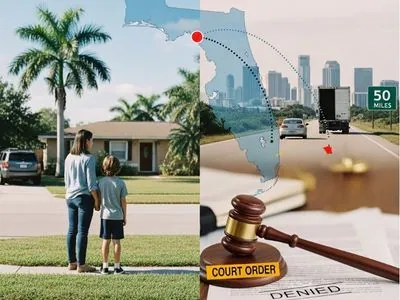 Florida’s relocation statute, §61.13001, uses a very specific definition of relocation. A move is considered a “relocation” when all three of these are true:
- The parent changes their principal residence with the child;
- The new home is at least 50 miles from their principal residence at the time of the last timesharing order (or pending case); and
- The move is intended to last at least 60 consecutive days (not just a vacation, temporary school program, or medical treatment).
Improper relocation usually means one of two things:
- The parent relocates the child at least 50 miles away without:
- A written agreement signed by all parties entitled to timesharing, and court approval; or
- A court order granting relocation after a proper petition and hearing.
- The parent drastically changes the practical reality of the parenting plan (for example, a quiet “soft relocation” with a new school, new county, and long-distance exchanges) without following the statute.
If a parent relocates without following §61.13001, the court can:
- Order the child returned on a temporary or permanent basis;
- Hold the relocating parent in contempt of court;
- Use the violation as a factor when deciding whether to modify the parenting plan; and
- Order the relocating parent to pay the other parent’s attorney’s fees and costs.
In other words: if the move is at least 50 miles and more than 60 days, and the parent didn’t follow the statute, you are not powerless. The law gives you leverage.
Step One: Don’t Panic – Protect Your Parenting Rights Quickly
If You Just Received a Petition to Relocate
If you’ve been served with a formal Petition to Relocate, the clock is already running. Under Florida law, you generally have 20 days to file a verified written objection. If you do nothing, the court can treat your silence as consent and approve the relocation, often without a full evidentiary hearing.
¶
¶ Your objection should:
- Be filed on time and properly served;
- Be signed under oath, not just a simple letter;
- Explain the specific reasons why relocation is not in your child’s best interests; and
- Describe your history of involvement with the child, school, medical care, activities, daily routines.
This is where having counsel matters. A rushed, emotional objection that just says “I don’t agree” wastes one of your most important chances to be heard.
If Your Child Has Already Been Moved Without Permission
If the other parent has already moved at least 50 miles away with the child without consent or a court order, that is exactly the type of situation the statute was written for. In the right circumstances, you can ask the court to:
- Enter a temporary order requiring the child to be brought back while the case is pending;
- Restrict further unilateral relocations;
- Consider modifying primary timesharing if the move shows a pattern of disregarding your parental rights; and
- Order the relocating parent to pay fees and costs associated with enforcing the order.
The sooner you act, the more seriously the court is likely to view the violation and the easier it may be to re-establish the status quo.
Legal Thresholds: How Florida Judges Decide Relocation Disputes
 Relocation cases do not start with a presumption for or against the move. There is no automatic “tie goes to the moving parent” and no automatic “tie goes to the parent who wants things to stay the same.” Instead, Florida courts look at the best interests of the child using specific statutory factors.
The Burden of Proof
- The parent seeking to relocate must prove, by a preponderance of the evidence, that the relocation is in the child’s best interests.
- If they meet that burden, it shifts to the non-relocating parent (you) to prove, also by a preponderance, that relocation is not in the child’s best interests.
Key Factors the Court Considers
Under §61.13001, the judge looks at many factors, including:
- The nature, quality, and length of the child’s relationship with each parent and important people in their life;
- The child’s age, developmental stage, and how the move would affect their education, emotional wellbeing, and stability;
- The feasibility of keeping a meaningful relationship with you if the move is allowed (realistic travel, cost, schedule);
- Whether the move will truly enhance the child’s and relocating parent’s quality of life (school, support system, financial stability);
- The reasons each parent has for seeking or opposing the move;
- Each parent’s employment and economic circumstances;
- Your track record of paying support and staying involved; and
- Any history of domestic violence or substance abuse by either parent.
The more your objection focuses on these child-centered factors, and not just your inconvenience or frustration, the stronger your position becomes.
Strategic Moves for the Non-Relocating Parent
From Brandon Legal Group’s perspective, fighting an improper relocation is not about “winning” against your ex. It’s about protecting your child’s stability and your bond with them. Here are strategic moves we help clients make, step by step.
1. Strengthen Your Role in the Child’s Daily Life
Judges look carefully at which parent is consistently showing up. You improve your position when you can document that you:
- Attend school events, parent-teacher conferences, and activities;
- Take the child to medical and therapy appointments;
- Help with homework and daily routines; and
- Comply with court orders and pay support on time.
When we present your objection, we want to be able to say, “This is not about control; this is about an involved parent fighting to preserve a real, living relationship.”
2. Document the Impact of the Proposed Move
Don’t just say, “It’s too far.” Show the court how the move changes your child’s life:
- New school, loss of current teachers and friends;
- Loss of regular contact with grandparents or extended family in Tampa Bay;
- Changes in extracurriculars, church, or support systems;
- Much longer travel times for exchanges and special events; and
- Realistic cost of airfare, gas, or time off work for visitation.
Judges respond to concrete, real-world details, not general complaints.
3. Offer a Child-Centered Alternative
Often, the relocating parent argues, “This move is my only chance to improve our life.” A strong response sounds like this:
- The child can remain in the Tampa Bay area with you as the primary residential parent;
- You support generous timesharing with the other parent (long holidays, summers, virtual contact); and
- You are willing to share some transportation burden if the court finds that relocation is still in the child’s best interests.
This shows the judge you are protecting your child’s reality, not simply blocking the other parent’s opportunities.
Common Mistakes That Hurt Your Case
Even loving, well-intentioned parents can sabotage their relocation case by reacting emotionally. We see the same mistakes over and over:
- Ignoring the petition. Missing the 20-day response deadline can let relocation be approved by default.
- Withholding timesharing. Cutting off contact outside an emergency makes you look like the problem to be fixed.
- Making it about you, not your child. Complaints about your own inconvenience (“my work schedule,” “my gas bill”) land poorly unless tied directly to the child’s ability to have a real relationship with you.
- Venting on social media. Screenshots of angry posts or threats can and do show up in court.
- Agreeing to “temporary” changes you never document. If you quietly allow a de facto relocation for months, the other parent will argue that the child has already built a new status quo.
Our role is to help you slow down, regroup, and pivot to a strategic approach before these missteps become part of your court record.
How Brandon Legal Group Helps You Respond
Relocation cases are some of the most emotionally charged matters we see in Florida family law. At Brandon Legal Group, we sit down with you and:
- Review your existing parenting plan and timesharing order;
- Clarify whether the other parent’s move qualifies as a relocation under §61.13001, or another type of modification or enforcement issue;
- Map out your timeline, including the 20-day objection window if you’ve been served;
- Build a detailed, evidence-based theory of why the move is not in your child’s best interests; and
- File the right motions to:
- Object to relocation;
- Seek emergency or temporary relief when appropriate; and
- Request attorney’s fees where the statute allows.
Our focus is keeping your child grounded in a life where both parents can realistically stay involved, whenever that is safe and possible.
If you believe your co-parent is planning or has already attempted an improper relocation, don’t wait. The sooner you get advice tailored to your specific facts, the more options you will have.
This article is for general educational purposes and is not legal advice. For guidance on your specific situation, speak with a Florida family law attorney.
FAQ: Fighting Improper Relocation in Florida
My ex already moved at least 50 miles away with our child. What can I do?
If the move meets the definition of relocation and was done without your written agreement or a court order, you may be able to ask the court to:
- Order the child returned on a temporary basis while the case is decided;
- Hold the relocating parent in contempt; and
- Consider changing primary timesharing or decision-making if the move shows a pattern of ignoring court orders.
These remedies depend heavily on your facts, the existing order, and how quickly you act, so get legal advice right away.
What if the move is less than 50 miles?
Moves under 50 miles generally don’t trigger the formal relocation statute, but they can still violate a parenting plan if they disrupt the schedule, school choice, or exchanges. In those situations, you may be dealing with a modification or enforcement issue instead of a relocation case. We look at your order and the real-world impact to determine the best strategy.
Can the judge order my child returned before the final hearing?
Yes, in the right circumstances. If the court finds the other parent has relocated without following §61.13001 or that the petition is defective, the judge can enter a temporary order requiring the child’s return or restraining further relocation while the case proceeds.
Do I have to send my child for “temporary” visits far away if I object to relocation?
Every case is different. Sometimes a court will temporarily allow a move; other times it will prohibit relocation until the final hearing. Do not unilaterally refuse ordered timesharing without legal advice. Doing so can seriously damage your case. Instead, talk with counsel about whether you should seek a temporary order clarifying or restricting travel.
How fast do I need to act?
Fast. If you are served with a Petition to Relocate, you typically have 20 days to file a verified objection. If your child has already been moved without permission, gathering evidence and filing the right motion quickly can make the difference between a short disruption and a new, entrenched status quo.
Brandon Legal Group is here to help you move from panic to a plan.