
Divorce impacts every facet of your life, and often, one of the most unexpected and challenging areas is your social circle; particularly mutual friendships. These are the friends you shared as a couple, often developed through your marriage, and navigating these relationships during and after separation requires immense emotional intelligence and strategic clarity. At Brandon Legal Group, we believe in unapologetic advocacy for your entire well-being. We don’t sugar-coat the reality: this process can be awkward, painful, and messy. But with a direct, strategic approach, you can manage these dynamics with strength and protect your peace.
The Unvarnished Truth: Friendships Will Shift (and That’s Okay)
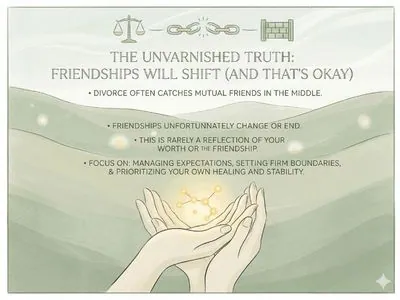 When a couple divorces, mutual friends are often caught in the middle. They may feel uncomfortable, pressured to choose sides, or simply unsure how to maintain relationships with both individuals. It’s a painful but inevitable truth that some friendships will change, and some may even end. This is rarely a reflection of your worth or the quality of the friendship; rather, it’s a consequence of the shifting landscape of your life. Your goal isn’t necessarily to force friends to “choose,” but to manage expectations, set clear boundaries, and prioritize your own healing and stability. Understanding this upfront is key to managing the emotional impact of divorce.
Strategic Steps for Navigating Mutual Friendships
1. Communicate Thoughtfully (Not Excessively)
- Keep it Concise and Neutral: When you inform mutual friends about your separation, keep the message brief and factual. Avoid blaming your ex-spouse or divulging intimate details of the marital breakdown. A simple statement like, “We’ve decided to separate, and it’s a difficult time for both of us. I value our friendship and hope we can maintain it,” is usually sufficient. This mirrors advice for communicating divorce to extended family.
- State Your Intent: Let friends know you’re not asking them to choose sides, but that you value their individual friendship.
2. Set Clear Boundaries (And Enforce Them)
Boundaries are your shields during this sensitive time. Be prepared to implement and reiterate them:
- No Gossip Zone: Make it unequivocally clear that you will not engage in negative talk or gossip about your ex-spouse. If a friend starts, politely change the subject or, if necessary, end the conversation. “I’m not comfortable discussing that,” is a powerful phrase.
- No Messenger Service: Friends are not conduits for messages between you and your ex. Insist on direct communication or communication through legal counsel for critical matters.
- Define Your Comfort Level for Shared Events: Discuss with your friend whether you’re comfortable attending events where your ex might be present. It’s okay to say no to situations that cause you anxiety.
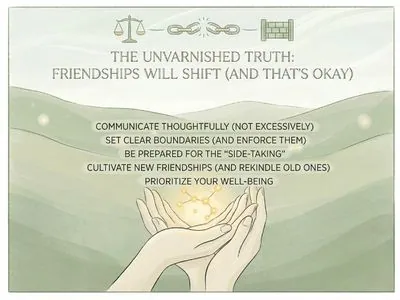 3. Be Prepared for the “Side-Taking”
Despite your best efforts, some mutual friends will inevitably gravitate towards one spouse or the other. This often happens organically, based on deeper pre-existing connections or simply who they feel more comfortable with. Don’t take it personally. Acknowledge the loss, mourn it if you need to, and then focus your energy on the friendships that remain genuinely supportive and respectful of your new situation. This is part of the broader process of finding support during your divorce journey.
4. Cultivate New Friendships (and Rekindle Old Ones)
Divorce offers a unique opportunity to redefine your social life. This is a crucial step in rebuilding and fostering your personal growth:
- Explore New Interests: Join clubs, take classes, or pursue new hobbies that connect you with new people. This is part of how personal hobbies can aid in divorce recovery.
- Reconnect with Pre-Marriage Friends: Reach out to friends from before your marriage. These relationships often offer a comfortable, judgment-free space.
- Build a “Divorce-Friendly” Circle: Seek out friends who have also navigated divorce; they often provide unique understanding and practical advice.
5. Prioritize Your Well-being
Your mental and emotional health is paramount. If a mutual friendship feels draining, toxic, disrespectful of your boundaries, or constantly pulls you back into marital conflict, it’s okay, and often necessary, to step back from it. Focus your energy on relationships that genuinely uplift you, support your healing, and celebrate your journey forward. This self-advocacy is a cornerstone of your post-divorce resilience.
The Brandon Legal Group Advantage: Strength in All Arenas
At Brandon Legal Group, our unapologetic advocacy extends beyond the legal battleground. We understand that navigating divorce is a holistic journey, and your social well-being is an integral part of your recovery. While we provide the decisive strength and strategic clarity for your legal case, we also empower you to manage the complex interpersonal dynamics that inevitably arise.
Ingrid’s “broomstick” approach isn’t just about sweeping away legal messes; it’s about sweeping away the confusion and fear that come with redefining your social life. We provide a framework that helps you anticipate challenges, set clear boundaries, and maintain your dignity throughout the process. Consider us your partner in building resilience across all aspects of your life post-divorce, from court documents to dinner parties.
Illustrative Scenario: Setting Boundaries with Respect
Maria dreaded socializing with her mutual friends after her separation from Tom. She knew they were fond of Tom, and she worried about awkward encounters, gossip, or friends inadvertently relaying information between them. Her anxiety was so high she started avoiding social events entirely.
During her consultations with Brandon Legal Group, while focusing on her legal strategy, Maria also expressed her distress about her social life. Ingrid, with her characteristic directness, advised Maria to be proactive and strategic. Maria, empowered, decided to speak individually with her closest mutual friends. She explained, “Tom and I are separating, and it’s difficult. I value your friendship, but I need you to understand that I won’t be discussing details of the divorce with anyone, and I won’t use you as a messenger. If you choose to socialize with Tom, that’s your decision, but please don’t discuss me or our situation with him, and certainly not with me.”
When one friend started to ask probing questions about “what went wrong,” Maria calmly but firmly reiterated, “I appreciate your concern, but that’s a private matter. Let’s talk about something else.” This strategic clarity, instilled by Brandon Legal Group’s approach, allowed Maria to set firm boundaries, protect her peace, and retain genuine friendships while gracefully letting go of those that couldn’t respect her terms. She felt empowered to reclaim her social life on her own terms.
Disclaimer: This scenario is illustrative and does not represent any specific client or outcome. Every personal situation is unique and requires personalized advice.
Frequently Asked Questions About Managing Mutual Friendships During Divorce
1. Should I tell mutual friends before my ex does?
Ideally, you and your ex-spouse can agree on a shared message and timing. If not, it’s generally best to inform your closest mutual friends yourself, calmly and factually, before they hear it through the grapevine. This allows you to control the initial narrative.
2. What if my friends ask who is “at fault” or start badmouthing my ex?
Politely but firmly shut down such conversations. State that you won’t discuss blame or negativity, and you won’t tolerate badmouthing of your ex. You can say, “That’s a private matter I’m not discussing,” or “I’m focusing on moving forward positively, and I’d appreciate it if we didn’t dwell on negatives.”
3. Is it okay for mutual friends to remain friends with both of us?
Yes, absolutely. A true mutual friend often aims to remain neutral and supportive of both individuals, respecting their separate relationships. You should encourage this neutrality and only ask them to respect your boundaries, not to choose sides.
4. How do I cope if some mutual friends choose my ex’s side?
It’s painful, but it happens. Acknowledge the loss, allow yourself to grieve, and then focus your energy on the friendships that remain genuinely supportive. Invest in building new social connections and rekindling old ones that offer you positive reinforcement and joy. This is part of your healing process.
Conclusion: Cultivating Your New Social Landscape with Strength
Managing mutual friendships during and after divorce is a subtle but significant challenge in your journey toward healing and rebuilding. It requires courage, clear communication, and the unwavering commitment to setting and enforcing healthy boundaries.
By approaching these social dynamics with strategic clarity and decisive strength, you empower yourself to navigate potential awkwardness and loss with dignity. Brandon Legal Group is not just your legal advocate; we are your partner in building resilience across all aspects of your post-divorce life, ensuring you maintain healthy relationships and cultivate a supportive social landscape for your vibrant future.