
They’re busy. They’re focused on family, work, caregiving, or just getting through the week. And because nothing feels urgent right now, estate planning becomes one of those things that keeps getting pushed to “later.”
The problem is that estate planning only feels optional until the moment it isn’t.
Why So Many People Keep Delaying Estate Planning
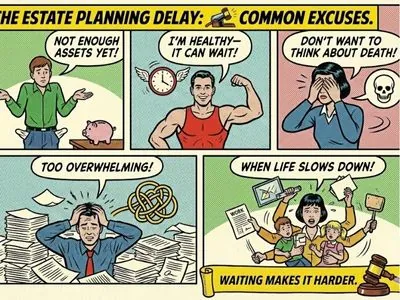 If you’ve been putting this off, you’re not alone. Some of the most common reasons people delay estate planning include:
- “I don’t have enough assets to worry about this yet.”
- “I’m healthy, this can wait.”
- “I don’t want to think about death.”
- “It feels overwhelming and complicated.”
- “I’ll do it when life slows down.”


Unfortunately, life rarely slows down. And waiting doesn’t make estate planning simpler. It usually makes it harder.

The Hidden Cost of Waiting Too Long
When someone passes away or becomes incapacitated without a proper estate plan, the consequences are rarely abstract.
They show up as:
- Family conflict over decision-making
- Delays in accessing funds to pay bills or medical expenses
- Court involvement that could have been avoided
- Outcomes that don’t reflect what the person actually wanted
Even for modest estates, the lack of planning can create unnecessary stress, expense, and emotional strain for loved ones.
The Reality: Florida has a formal probate process. If you own assets in your individual name (without beneficiaries or a Trust), those assets are “frozen” upon death. No one can touch them until the court appoints a Personal Representative.
The Cost: Probate attorney fees in Florida are set by statute (starting around 3% of the estate value) and can take 6–12 months minimum. A Living Trust can often bypass this entire process.
Estate Planning Is Not Just About Death
One of the biggest misconceptions is that estate planning only matters after someone passes away.
In reality, a strong estate plan also protects you while you’re alive.
Proper planning can:
- Ensure someone you trust can make decisions if you can’t
- Prevent financial chaos during medical emergencies
- Protect minor children or dependent family members
- Reduce uncertainty during already stressful moments
This isn’t about planning for the worst; it’s about removing avoidable risk.
¶¶
The Reality: This is arguably the most critical part of the article. If you become incapacitated (e.g., a coma, dementia, stroke) and do not have a valid Durable Power of Attorney and Health Care Surrogate, your family cannot automatically access your bank accounts to pay your bills or make medical decisions for you.
The Consequence: Your family would be forced to sue you in court to obtain a Guardianship. This is a public, expensive, and time-consuming court process where a judge declares you incapacitated and strips you of your rights. A simple document prevents this entire ordeal.
Why “Someday” Often Turns Into “Too Late”
Many families only discover the importance of estate planning after a crisis.
An unexpected illness. A sudden accident. A death that no one saw coming.
At that point, options are limited. Decisions are rushed. And loved ones are left trying to guess what should have been done, often while navigating grief.

¶ Estate planning done early is quiet and uneventful. Estate planning done too late is chaotic.
If you are married and have children from a previous relationship, your spouse does not get everything. Under Florida law, your spouse receives 50%, and your children receive the other 50%. This often forces the sale of the family home or creates financial hardship for the surviving spouse

You Don’t Need a Perfect Plan, You Need a Real One
¶ 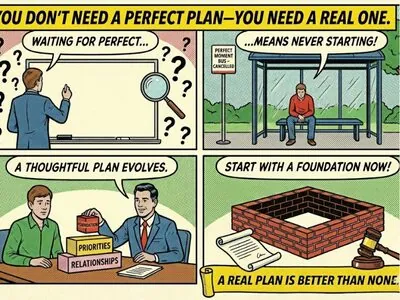 Another reason people delay is the belief that they need to have everything figured out before starting.
You don’t.
A thoughtful estate plan evolves over time. What matters is having a solid foundation in place, one that reflects your current life, relationships, and priorities.
Waiting for the “perfect moment” often means never starting at all.
Why Working With a Local Estate Planning Attorney Matters
Estate laws vary by state, and Florida has specific rules that affect how assets are handled, how guardians are appointed, and how disputes are resolved.
Working with an attorney who understands Florida estate planning law helps ensure your plan actually works when it’s needed, not just on paper.

¶ The goal isn’t complexity. It’s confidence.
If You’ve Been Putting This Off, You’re Not Behind. But It’s Time
¶ There’s no shame in waiting. Life happens.
But if estate planning has been sitting on your mental to-do list for years, consider this your permission to finally address it, with support, clarity, and compassion.

¶ Starting now is almost always easier than waiting longer.
Frequently Asked Questions
Is it too late to start estate planning?
In most cases, no. Estate planning can be started at almost any stage of life. Taking action now is usually far better than waiting longer.
Do I need an estate plan if I don’t have many assets?
Yes. Estate planning isn’t just about wealth. It also covers decision-making, guardianship, and protecting loved ones from unnecessary stress.
What happens if I die without an estate plan in Florida?
If you pass away without an estate plan, Florida law determines how your assets are distributed. That outcome may not reflect your wishes.
Why do people procrastinate on estate planning?
Most people delay estate planning because it feels uncomfortable or overwhelming, or because it doesn’t feel urgent, until it suddenly is.