

Avoiding Probate: Why Your Trust Alone Isn’t a Silver Bullet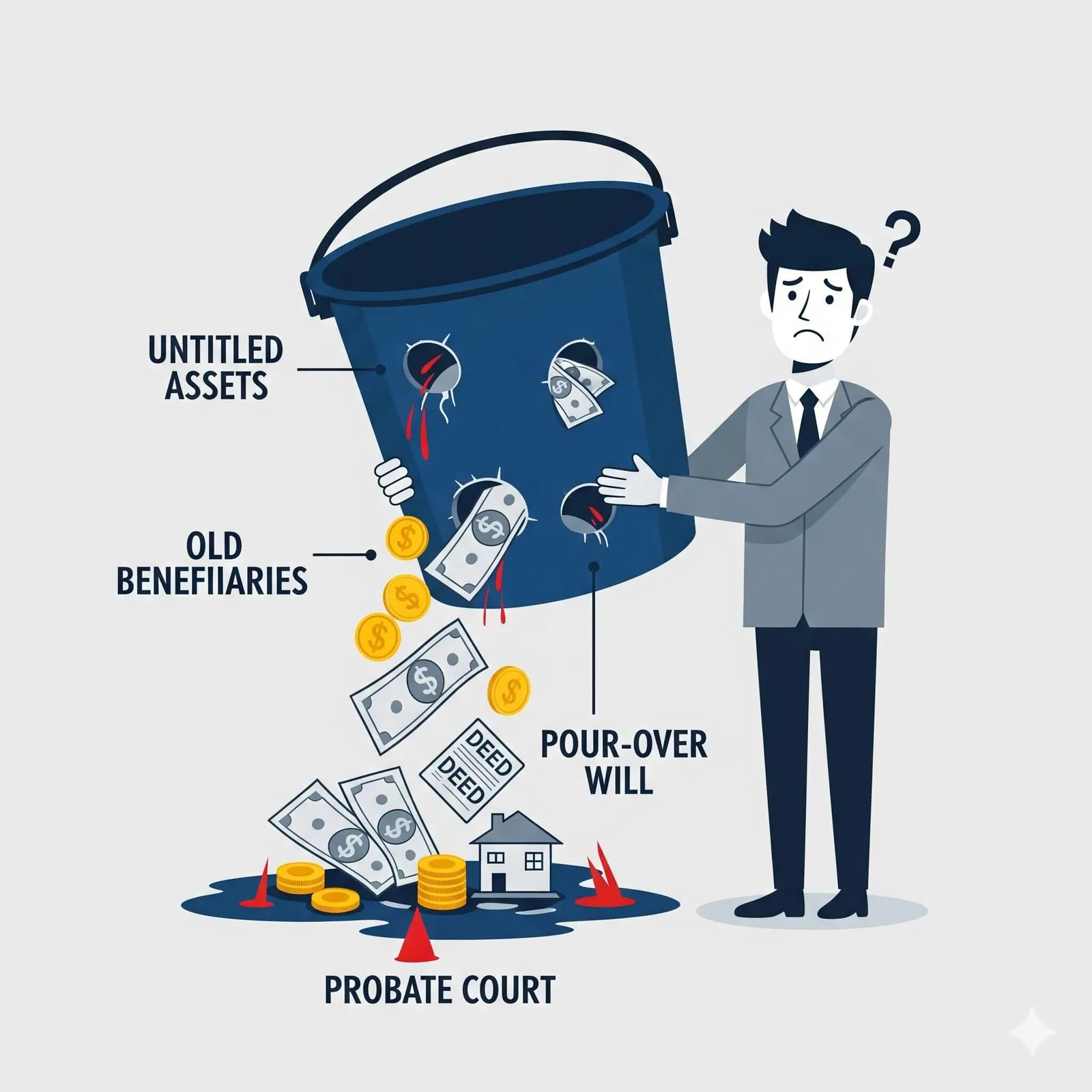
Thinking your revocable living trust is a forcefield against probate? Think again. A trust is a powerful tool, but it’s not automatic. True probate avoidance requires a meticulous, multi-strategy approach that coordinates your entire financial life. This is the reality check and strategic guide to ensuring your assets bypass the court system, for real.

The Trust Fallacy: How Assets Slip Into Probate
A revocable living trust only controls the assets you put into it. This is the most critical and overlooked detail in estate planning pitfalls. Pouring your coffee doesn’t mean the mug fills itself; you must title your assets in the name of the trust. Failure to do so leaves glaring holes in your plan, guaranteeing a costly and public probate process for those forgotten assets.
The “Forgotten” Assets That Still Trigger Probate
Even with a perfectly drafted trust, probate is often triggered by:
- The “Pour-Over” Will’s Catch-All: While a pour-over will directs forgotten assets into your trust upon death, it does not avoid probate. It simply makes the probate court the mechanism for funding your trust.
- Incorrectly Titled Assets: An account still in your invidual name, a deed not transferred to the trust, these are invitations for the probate court to get involved.
- Assets That Bypass the Trust Entirely: Certain assets, like IRAs, 401(k)s, and life insurance policies, transfer directly to named beneficiaries. If a beneficiary is deceased or you named your “Estate,” these assets will plunge directly into probate.
Building a True Probate-Proof Plan: Beyond the Trust
A comprehensive strategy uses the trust as the central hub, supported by other powerful non-probate assets and titling techniques.
1. The Power of Beneficiary Designations
For retirement accounts and life insurance, your beneficiary designation is king. It overrides your will and trust. Naming specific individuals or, for larger estates, naming your trust as the beneficiary (after careful tax analysis) ensures these significant assets avoid probate entirely.
2. Joint Ownership with Rights of Survivorship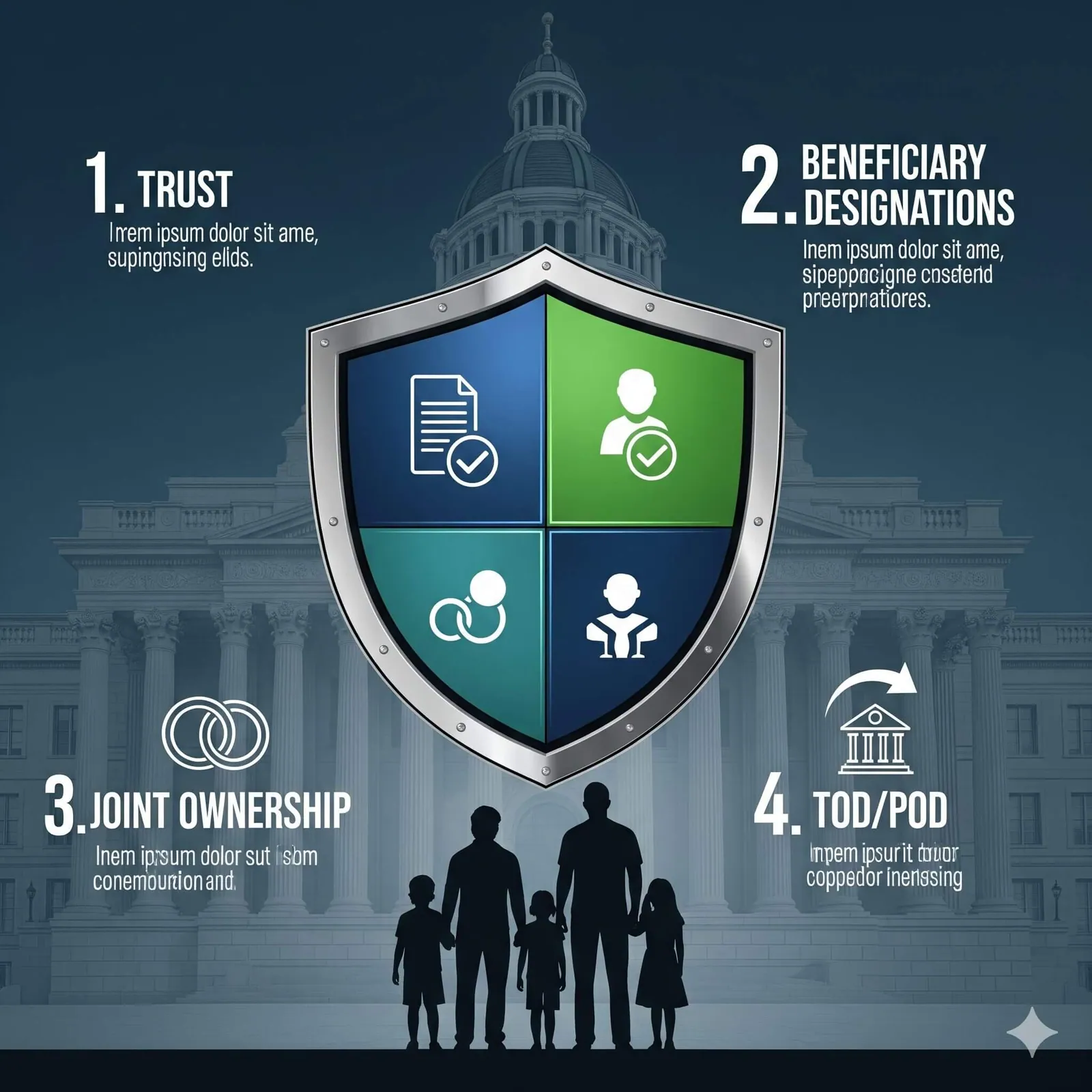
For real estate or bank accounts held with a spouse, joint ownership with rights of survivorship (JTWROS) means the asset automatically transfers to the surviving owner outside of probate. However, this can be risky for non-spousal relationships and requires careful consideration.
3. Transfer-on-Death (TOD) and Payable-on-Death (POD) Designations
In Florida, you can add POD designations for bank accounts and investment portfolios. For real estate, an enhanced life estate deed (or “Lady Bird Deed”) serves a similar function by allowing the property to pass to a beneficiary upon your death, no probate required. These are simple, free forms that instruct the financial institution or deed to transfer the asset directly to a named person upon your death.
Consider this illustrative scenario: A client had a beautiful trust but never transferred his brokerage account into it. He also never updated the beneficiary on his IRA from his ex-wife. Upon his death, the brokerage went through probate via the pour-over will, and the IRA went directly to his ex-wife. His intended heirs received a fraction of what he planned.
The Coordination Imperative: Your Annual Estate Plan Check-Up
Estate planning is not a one-and-done event. It’s a process. An annual review ensures that new assets are properly titled and beneficiary designations are updated after major life events like marriage, divorce, births, and deaths.
The BLG Probate-Avoidance Audit
We don’t just draft documents; we implement systems. Our process includes:
- Asset Inventory Session: We identify every asset and its current title.
- Titling & Beneficiary Action Plan: We provide you with exact instructions and letters to send to your financial institutions to ensure everything is aligned with your trust.
- Future-Proofing Protocol: We schedule annual reviews to capture new assets and life changes, ensuring your plan remains airtight.
The Bottom Line: Certainty, Not Hope
Picture this: instead of hoping your family avoids probate, you own the confidence of a fully coordinated plan. You feel the relief of knowing that no asset will be left behind to get tangled in a court system you sought to avoid. You see your heirs settling your affairs quickly, privately, and without unnecessary cost. This is the power of a plan that actually works.
FAQ: Avoiding Probate
Why might a trust alone not avoid probate?
A trust alone does not avoid probate because it only controls assets that have been formally transferred into it. Any asset held solely in your individual name at death, without a beneficiary designation or joint ownership, will likely require a probate proceeding to be transferred to your heirs, even if you have a trust.
How can you fully avoid probate in estate planning?
Fully avoiding probate requires a multi-faceted approach: funding your revocable living trust with all appropriate assets, using payable-on-death (POD) designations for bank accounts, and using beneficiary designations on retirement accounts and life insurance. For real estate, a Lady Bird Deed can ensure the property passes outside of probate. It is also important to utilize joint ownership with rights of survivorship where appropriate for married couples.
What are common mistakes that still lead to probate?
The most common mistakes include failing to title new assets in the name of the trust after it’s created, neglecting to update beneficiary designations after major life events, assuming a “pour-over” will avoids probate (it doesn’t, it just uses probate to fund the trust), and owning property in individual name without a survivorship mechanism like a Lady Bird Deed or joint ownership.